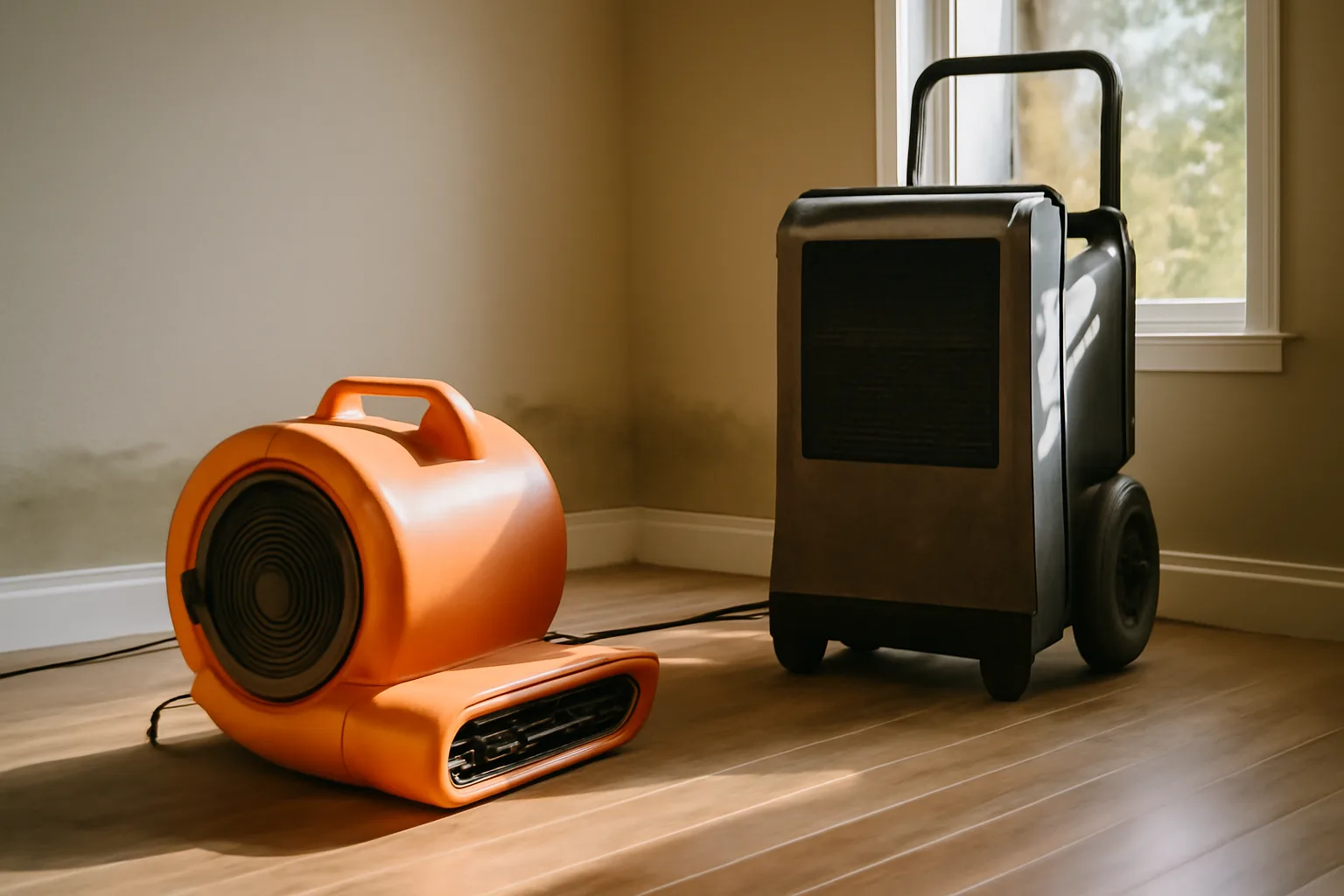
A fire that the department puts out quickly in Barnegat still leaves the building soaked, sooty, and saturated with odor. The crew documents and removes the unsalvageable, cleans the salvageable, and dries the wet so the rebuild starts on a sound shell. Plaster-and-lath walls common in Barnegat hold smoke differently than drywall, changing how we clean and deodorize them. The claim file traces smoke beyond the burn room with photos, so the carrier funds the full cleanup, not just the visible fire. Phone 551-237-7479 for an emergency Barnegat fire and smoke response, holidays included.
What Determines The Real Claim Size
The smell after a fire is residue bonded into porous materials, not just air that needs clearing. Residue settles in wall cavities, ductwork, and the spaces behind trim, so cleaning only the visible surfaces leaves the smell to return.
Our crew secures the structure, pulls the water the fire crew left, and cleans soot from the surfaces it actually reached — not just the obvious ones. We photograph each surface before and after cleaning so the soot work is shown, not merely claimed.
Why Smoke Odor Comes Back
The HVAC system is the most common reason a "finished" fire job still smells weeks later. We treat the air handler and the runs, not just the registers, because that is where the odor reservoir actually sits.
The HVAC decision is documented either way, so the carrier sees why the scope reads the way it does. Done right, the odor is gone and stays gone — no returning smell once the masking would have faded.
Why A Fire Loss Has Two Clocks — The Basics
The fire department does its job well, and what it leaves behind is a soaked building that starts to mold if left wet. The longer the water sits, the more of the building crosses from cleanable to removable, exactly as in any water loss.
Our crew pulls the water the fire left, sizes drying equipment to the saturation, and tracks the dry-down to standard. Handling the water early is what keeps a fire loss from turning into a second, avoidable mold claim weeks later.
The fire department does its job well, and what it leaves behind is a soaked building that starts to mold if left wet. A fire loss dried to standard closes cleanly; one left damp reopens as mold behind the freshly cleaned walls. We stabilize the opening, extract the suppression water, and dry the framing on metered readings before it can colonize. The water carries soot deeper into porous materials, so leaving it in place spreads the contamination further.
The Cost Of Letting Soot Sit — The Honest Version
Soot is acidic, and it keeps corroding metal, glass, grout, and finishes for as long as it sits uncleaned. Soft, porous materials drink in the residue and the odor, so waiting decides whether they can be saved at all.
We clean soot by surface type — wet method, dry method, abrasive — because what works on tile fails on raw wood. That is why fire cleanup is urgent in a way the visible burn area does not make obvious.
Soot is not inert; it is corrosive, and the clock on permanent staining starts the moment the fire goes out. A quick soot response is the difference between salvaging surfaces and rebuilding them. We map the soot travel through cavities and ductwork, then clean each affected surface on its own terms. Soft, porous materials drink in the residue and the odor, so waiting decides whether they can be saved at all.
Saving What Can Be Saved — In Plain Terms
The belongings in a fire-damaged home need as much careful handling as the structure around them. We sort the contents into salvage and loss, clean the salvage in a controlled environment, and record the rest for the claim.
We build the contents file the same way we build the structure file — as we work, with evidence behind each line. We return the cleaned contents once the structure is ready, closing the loss completely rather than partially.
What is inside the home — furniture, clothing, keepsakes — is part of the loss and part of the recovery. We return the cleaned contents once the structure is ready, closing the loss completely rather than partially. The inventory ties each item to its condition, so the adjuster can see exactly what the smoke and water reached. Items that can be cleaned are removed, treated off-site, and protected; items beyond saving are documented before disposal.
How this fits the bigger recovery
Damage in {city} has a way of overlapping into other work — fire damage restoration often overlaps with emergency water mitigation, storm cleanup, mold cleanup, Category-3 water cleanup, finish carpentry and rebuild, and our crew handles all of it under one contract. We hold the same standard across and everywhere else across area.
If you searched for local emergency restoration, Whatever hit your property, you get straight answers, not a sales pitch, and we get to work. Call 551-237-7479 any hour, read From Extraction to Dry: The Barnegat Water Loss Timeline on our blog, or head back to our Barnegat home page to see everything we do.